Showing posts with label Genre text. Show all posts

Saturday, December 22, 2018

Factual Recount: Biography

What is factual recount?

Factual recount reports the particular events by retelling facts or information. The writer tells the events that he/she has not been involved in that events. The objective of a factual recount is to inform a true event. 

Factual recount is written in the third person point of view. We use past tense to write a factual recount. One examples of factual recount is biography. 

Biography is a detailed description of someone's life. People who are written into a biography is usually someone who has made a great achievement and has made a contribution to the world. 

What information can you include in your biography?

Introduction
Introduce your subject in the first paragraph. tell who your subject is. What he/she is, e.g. an inventor of some technology, an athlete who has made amazing achievements, a scientist, a world leader, and many more. Next, tell why he/she is worth to write about.

Basic facts
In the next paragraphs, you can tell some basic information about the subject. You can inform the date and place of birth, parents and siblings, his or her educational background.

Events shaped the subject's life
In this paragraphs you can relates the subject journey to success. Tell his/her greatest achievement. Inform the lasting contribution to the world. Lastly, if the subject you write has dies, tell about his/her death.

Conclusion
In the last paragraph, tell why the subject is special or what people can learn from him/her.

Click the link below to see the biography example.
Ludwig van Beethoven


Saturday, October 13, 2018

How a Butterfly is Born?

Explanation Text


We all know how beautiful butterflies are. Do you know that butterflies are not hatched with those beautiful and colourful wings? To have those gorgeous pair of wings, they have to go through a long transformation. This process is called metamorphosis. Butterfly life cycle or metamorphosis takes 4 stages. They are eggs, caterpillar, pupa, and butterfly.

Stage 1: the eggs
It all starts when a female butterfly lays her eggs, usually on leaves or stems of plants. Inside these tiny eggs, caterpillars grow. The eggs shape and texture can vary depending on the butterfly species. They can be round, oval, or cylinder. Their texture can be smooth, bumpy, or wrinkled.  The time to hatch also varies. Some species will hatch within a few weeks. Others will only hatch when the weather is warm enough.
Butterflies eggs on a leave

Stage 2: caterpillar
Once ready, the caterpillar leaves its egg home and enters the big outside world! And these little critters have one serious appetite. They actually eat their way out of the egg and immediately start chomping on the leaves of the host plant. During this stage, they shed their skin four or five times. As the caterpillar grows, its skin becomes too tight and splits open, revealing a new, larger skin underneath. A fully grown caterpillar can be over 100 times larger than when it emerged from its egg.
A caterpillar


Stage 3: the pupa
Once fully grown, the caterpillar forms into a “pupa” also known as chrysalis. Chrysalis is a kind of vessel in which the caterpillar changes into a butterfly. They usually do this on twigs or safe, hidden areas around the host plant. The pupa stage may last a few weeks to several months depending on the species. The pupa has a hard case around it. This case protects the pupa from predators and extreme weather conditions. The tissue, limbs and organs of the caterpillar transform inside the pupa. Then, a marvelous winged butterfly emerges!
A pupa or chrysalis
Stage 4: the butterfly
Once the butterfly is ready to emerge, the case around the pupa splits open. At first, the wings are wet, soft and wrinkled against its body. The butterfly waits for its wings to dry, and pumps a liquid called hemolymph into them so that they become big and strong. Once ready for flight, this brilliant bug then takes to the air in search for flowers to feed on. The cycle complete, and it is ready to start all over again!

A butterfly emerging from its cocoon

Butterflies need to go through a long process to become what they are. It takes days even weeks for them to be wonderful winged insects.


Sunday, October 7, 2018

Water Cycle

Explanation Text

The water cycle is also known as the hydrological cycle.  The water cycle is how the earth's water recycles itself.

The cycle includes precipitation, evaporation, condensation, and transpiration. Earth's water keeps changing from liquid water to vapour and then back to liquid water. This cycle happens because of the sun's heat and gravity.


First of all, water from lakes, rivers, streams, and the sea get heated up by the sun. Then, it turns into vapour that rises into the air.

Next, these water molecules form into clouds. This is because a condensation occurs.

When the air and the water cool, they form drops of water which then fall to the earth as rain.  If they are frozen, they become snow. Once the water reaches the ground, it can flow across the land until it reaches rivers, lakes, streams, or the sea.

It can also sink into the ground and flow because of gravity through gaps in rock, gravel and sand.  Because of this, it reaches these bodies of water too.

Next,  the cycle begins again, when water is evaporated once more.

Explanation Text

What is an explanation text?

An explanation text tells the reader how something works or why something happens. It describes the stages in the process, for example, water cycle, how a caterpillar turns into a butterfly. An explanation text can also details the causes, for example why we blink when we sneeze, why is the ozone layer getting thinner.

Features

  1. Explanation text is written in simple present. It tells facts or general truth.
  2. Talk in group instead of individual, e.g. boats, cats, cows, and so on.
  3. It uses connectives to tell the sequencing process such as first, then, following, finally, and many more. It sometimes uses connective that explain cause-effect like so and because.

Structure

Title
Title is an important part. It can introduce what the paragraphs explain about. We may use questions why or how on the title, for example why do we sneeze? or how do we breathe?

Introduction
This gives information what to be explained in the following paragraphs. 

Explanation
These paragraphs inform the steps explaining why or how it happens.

Conclusion
The last paragraph sums up the main ideas or draw everything together.

These are some example of explanation text. Click to read the text.
Water Cycle
How a butterfly is born?

Reference
http://www.primaryresources.co.uk/english/englishD4.htm 
http://www.literacyideas.com/explanation-texts/ 
http://englishonline.tki.org.nz/English-Online/Planning-for-my-students-needs/Resources-research-and-professional-support/Features-of-text-forms/Explanations 


Saturday, October 6, 2018

Diving in Bunaken Island

Personal Recount


Last year, I left New Zealand for Bunaken island. I went there with a group of New Zealand divers. Getting there was not quite easy. It took a long flight to get from Wellington to Bunaken island.

Soon after we arrived at Bunaken, we got a general briefing. The guide explained how to dive safely. They also told us where to find the best diving site. It included a description about how to take pictures under water.

Then, we began our diving. In our diving, we saw groups of tiny fish. In order to identify them, we needed a good guide. We need to know about their habitat and behavior. Without that knowledge, it is difficult to identify them.

In summary, the trip was mostly enjoyable. This place is so impressive with its marine life.

Saturday, September 29, 2018

A Cold Crisp Day

Personal Recount

Last Sunday, my 2 sisters and I went for a walk in the park. It was freezing, but our mom and dad insisted that we had some outdoor activity. I reluctantly come with them.

We eventually reached the park. I lifted my gloves up to my damp eyelashes and wiped the snowflakes from my eyes. I could not feel my nose and my breath was like icicles forming in the air. I was cold. I was fed up. I wanted to go home. I could see my footprints on the snowy path. They were like a trail of breadcrumbs in the forest showing me the way home.

On the other hand, my sisters enjoyed the walk. They joyfully played with the snow. They started throwing the snowballs to each other. I stayed away from them. Otherwise, they would begin the snow war with me. 

Then, I stopped. I listened to the magic around me. I heard the wind howling like a dog hungry for a yummy bone. The branches of trees had become bare, and the grass was covered with white sparkling blanket. My breath was like smoke wafting up into the freezing cold air. I began to enjoy the park and joined my sisters building a small snowman.


Suddenly, there were mom and dad holding big cups. Mom handed one to me with an enormous smile on her face.

“Here you are Jo. This will keep you warm,” she said.

It was hot chocolate. I slowly sipped the delicious liquid and felt it dripping down into my tummy.

My wet woolen gloves were no longer frozen but warm. I was no longer fed up or cold. Walking in the park during winter was not that bad after all. It can be fun.

Recount Text

What is a Recount?

A recount retells an experience or an event that happened in the past. There are some types of recount. Some of them are personal recount and factual recount.

Personal Recount
It tells an activity that the writer has personally involved in, for example diary journal and personal letter.

Factual Recount
It reports the particular of an event by reconstructing facts, for example historical recount, biography, and autobiography.

This article will focus on the personal recount writing. Factual recount will be discussed in the next post.

Text Structure

Personal recount is divided into 3 parts. They are orientation, sequence of events, and reorientation.

Orientation 
It gives the background information. This paragraph introduce What the event was, where it  happened, when it happened, who involved. Sometimes, you can include why it happened.

Sequence of events
Events are identified and are told in chronological order.

Reorientation
In this paragraph, the writer expresses personal opinion regarding the event. Besides, the writer can recommend others, or tell what he or she learnt from that events.

Personal recount is mostly written in the first person "I". Although, it can be sometimes written in the third person, "he, she, they".

We use past tense to write a personal recount because it has already happened. 

Personal recount is written in chronological order, in order in which they happened. Use time connectives such as first, next, then, eventually, and so on. 

Below are the example of personal recount. Click on the title below to read them.


Wednesday, September 26, 2018

Kangaroo

Descriptive Text

A kangaroo is an animal lives in Eastern Australia. It has a smaller relative called a wallaby which lives on the Australian island of Tasmanian and also in New Guinea. 

Kangaroos eat grass and plants. They have short front leg, but they have very long and very strong hind legs and a tail. These they use for sitting up on and for jumping. Kangaroos have been known to make forward jumps of over 8 meters and leap across fences more than 3 meters high. They can also run at speed of over 45 kilometers per hour.

News.com.au

The largest kangaroos are the great Grey Kangaroo and the Red Kangaroo. Adult kangaroo grows to a length of 160 meters and weighs over 90 kilograms.

Kangaroos are marsupials. This means that the female kangaroo has external pouch on the front of her body. A baby kangaroo is very tiny when it is born. It crawls at once into this pouch where it spends first five months of life.

Camping

Recount Text

A group of kids went on a camping for their school vacation. They arrived at the camping ground late in the afternoon. First, they put up their tent in the middle of a field. When they finished, they cooked a meal over an open fire. They were all hungry, and the food smelt good. After a wonderful meal, they told stories and sang songs by the campfire. But, sometime later, it began to rain. The kids felt tired, so they put out the fire and crept into their tent. Their sleeping bags were warm and comfortable, so they all slept soundly.

The next morning, the kids packed their things and went home happily. 


Saturday, September 22, 2018

The Ants and the Grasshopper

Narrative Text

One summer day, a grasshopper was hopping about, chirping and singing. a group of ants passed by. They are struggling to carry kernels of corn. 


"Where are you going with those kernels? asked the grasshopper.

"We're delivering them to our ants hill, of course," replied an ant.

"Let's sing with me, instead of working hard. winter is far away," teased the grasshopper.

The ants didn't even stop. They went on working, storing food for winter.  

One bright day in late autumn, a family of ants was busy under the warm sunshine. They were drying out the grain that they had stored during summer. The grasshopper, who was starving, came up and begged the ants for something to eat.

"What!" cried the ants in surprise, "Haven't you stored anything away for the winter? What were you doing all last summer?"

"I didn't have time to store up any food," whined the grasshopper. "I was so busy playing music. Before I knew it, the summer was gone."

The ants shrugged their shoulder in disgust. "Playing music were you?" they cried. "Very well, now dance!"

And the ants turn their back on the grasshopper and went on with their work.

Moral value:
There's a time for work and a time for play.

Sunday, April 9, 2017

The Three Little Gnomes

Long, long ago, a tree stood strong and its top branches reached far above any of the other trees in the forest, but the tree had grown so old. It began to shiver when the storms howled through the branches. Finally in one of the fiercest storms, it tumbled to the earth with a great crash.
There, the tree laid for centuries, and vines and bushes grew until it was almost hidden from view.
Smoke curled up over the trunk of the old tree and floated away through the forest. Tiny voices came from beneath the trunk of the old tree.

Now, down beneath the trunk of the fallen tree, lived three little gnomes. It was the smoke from their fire which curled up over the trunk of the old tree and floated away through the forest.
They were preparing dinner and laughing and talking together. Suddenly, they heard the sound of a horn.
“What can it be?” one asked.
“It sounds like the horn of a huntsman!” another cried.
As the sound came nearer, the three little gnomes put the fire out so that no one would discover their home. Then, they climbed upon the trunk of the tree and ran along it. From there, they could see across the forest without being seen themselves. When the sound of the horn drew very close, they saw a little boy climbed through the thick bushes.
As the little boy came out into the open space, the three little gnomes saw that he was crying.
“He must be lost!” said the first little gnome.
“He looks very tired and hungry!” said the second little gnome.

“Let’s go and ask him!” said the third little gnome.
So the three little gnomes climbed down from the tree trunk and went up to the little boy. They stood about the boy and watched him. He was crying. Finally one of the little gnomes sat down in front of the little boy and spoke to him.

“I am lost!” the little boy said. “My father went hunting yesterday with all his men. When they were out of sight, I took my little horn and followed them, but I soon lost their track, and I have wandered about with nothing to eat. Last night I climbed a tree and slept!”
The three little gnomes wiped the little boy’s eyes and led him to their home under the fallen tree. There they finished preparing the dinner and sat about until the little boy ate and fell asleep. Then, the three little gnomes carried him and placed him upon one of their little beds.

Friday, April 7, 2017

Narrative Text

What is narrative text?

Narrative is a type of writing that tells stories, and it relates to a series of events. The events are given in chronological order.

The purpose of a narrative text is to entertain or to gain and hold a reader's interest. It can also aim to teach or to inform readers.

The narrative text writing could be fiction or nonfiction. The previous type is a made up story and based on imaginative events, such as novels, poems, short stories, science fiction, romance, and many more. The later, however, is based on the real fact like memoirs, biographies, or news stories.

Here I will focus more on the fiction type of narrative text.

The elements of narrative text

Characters
There are two kinds of characters in a narrative text, main and supporting characters.

Setting
Setting tells about places, where the story takes place. It is also about time, when the story takes place.

Plot
It is all of the events in the story that is organised in a chronological order.

The plot of a story can be divided into three parts. 

Orientation
It is the beginning of the story. It tells who the story is about, where it takes place, and what the problem is.

Complication
In this part, characters attempt to solve the problem or to find a solution.

Resolution
This is how the story ends. The problems is solved, the mystery is revealed, or the quest is accomplished.

Below are examples of narrative text.

The Wolf and the Crane

A wolf had been eating so much and so greedily that a bone stuck crosswise in his throat. He could not take it out either up or down, and of course he could not eat anything. This situation really scared the greedy Wolf off.


So, he went hurriedly to see the Crane. He was sure that she, with her long neck and bill, would easily be able to reach bone and full it out.

"I'll give you a bunch rewards," said the wolf. "If you can pull the bone our for me."


The Crane, as you imagine, was very uneasy about putting her head in a wolf's throat. But, she was grasping in nature, so she did what the Wolf ask her to do.

When the Wolf felt that the bone was gone, he started to walk away.

"But what about my reward!" called the Crane anxiously.

"What! snarled the Wolf whirling around. "Haven't you got it? Isn't it enough that I let you take your head out of my mouth without snapping it off?"

Moral: Expect no rewards for serving wicked.


A Crow and Red Ant


Once upon a time there was a crow which liked to perch upon a branch of a tree that grew by a river. One noon, the crow perched upon the branch as usual. Suddenly, when she was overlooking, she saw a red ant was floating in the middle of the river. The red ant needed her help. Soon, she pecked of a leave at the branch, and took it to the red ant who was struggling for the safety of his life. Quickly the red ant climbed up the leave, and he was safe.

"Thank you, Mrs. Crow," said the red ant. "You saved my life. I owe you."

"You're welcome," replied the crow and flew back to the tree. 

Then, the red ant sailed on the leave and landed at the riverside near the tree where the crow usually perched.

A few moments later, a hunter came. He was carrying a gun  in his hand. As he saw the crow perching upon the branch, he took aim at the crow. He was going to shoot the crow. To see the crow was in danger, the red ant which was saved by the crow earlier, immediately crawled closer and closer to the hunter. At the very short moment before the hunter fired his gun, the red ant was successful to reach the hunter's foot and then he bit it very hard. The hunter shouted so loudly that he shot the crow a few centimeters in the wrong direction. The crow was surprised to hear the gun-shot, then quickly flew away to the sky. After the hunter went away, the crow came to the red ant. 

"Thank you for your help, Mr. Ant. That's very kind of you. Thank you very much," said the crow. 

"Never mind. I'm glad you're safe. So, I've repaid your kindness. That's what friends are for," replied the red ant.

Wednesday, January 4, 2017

Information Report

Information report is a factual text. It has information so that the reader learns about a topic. It provides information about living thing such as panda, whale, orchids, or non-living things like cars, computer, and so on.

You have to remember that an information reports:
  • Uses facts
  • Gives details about a topic
  • Doesn't give personals views of the writer
Structure of information report text:
Title
The title represent what the text is going to tell about.

Introductory paragraph
This is the first paragraph. It introduces the subject of the report.

Body paragraph
This paragraphs contain details about the topic. 

Conclusion
We summarize or review the topic that has been described in the previous paragraphs.

Language
We commonly use simple present to write an information report. Simple past and simple future are also possible to use. The information report is written in the third person point of view.

Below are the sample of information report text. Click the title to read them.

Pelicans
Tornados
A Plantlike animal


A Plantlike Animal

Information Report

If you walk along a rocky beach at low tide, you may not notice the sea anemones. When they are dry, anemones look like rock. When they are underwater, they open up and look like flowering plants. They have thick stalk and "petals." But anemones are not rock or plants. They are animals.

The anemone's petals are really poisoned-tipped tentacles. When a small fish swims too close to the anemone, its tentacles close around the fish and full it inside. Then, the anemone digests its meal.
Anemones
People used to think that all sea anemones did was sit and wait for food to come by. But it seems that anemones are more complicated than that. An anemone sprouts buds that become new anemones. Eventually, the anemones form groups. If two groups begin to crowd each other, an anemone war can develop.

An anemone from one group can use its poison tentacles to slap an anemone from the other group. The other anemone can slap back. When the fighting gets serious, the loser may "run away." It slithers out of its enemy's reach.

It's not known yet whether anemones have other way of getting and keeping territory, but scientists are considering further research.

Source: Timed Reading Plus, Edward Spargo

Dry anemone

Tornados

Information Report

A tornado is a powerful, twisting windstorm. It is one of the most destructive of all the storm that we have on earth. A tornado is also called a waterspout.

A tornado is a long cloud which comes down from the sky, It likes a funnel and consists of wind which whirls around and around extremely fast. In fact, the wind can reach a speed of more than 900 km per hour. 

Weather scientists are unable to know exactly when tornadoes will occur. Fortunately, the tornado is not usually very big and it does not last long.

A tornado
Vocabulary
Funnel [N]  : tube
Twirl [V]    : turns in a circle

Pelicans

Information Report

Pelicans are part of the bird family. Pelicans have a big bill with a pouch. Most pelicans have body feathers. All pelicans have webbed feet. Most pelicans live around the coast. Pelicans eat crustaceans, crabs, fish and shrimps. Pelicans fly with their head back. Pelicans lay two, three, or four white eggs. They take thirty five days to hatch.

A pelican 
Vocabulary
Bill [N]              : the beak of bird
Web [N]           : the skin connecting the toes of some birds that help them when swimming
crustacean [N] : types of animals that live in the water and have a hard outer shell.

Tuesday, December 22, 2015

Descriptive Text

What is a descriptive text? This might be the question that come into people's mind when talking about descriptive text. Since I teach this kind of text to the sixth grade. I try to make the explanation simple. I sum up this from various resources.

Descriptive text is a text written to describe something. The purpose of descriptive text is to describe an object, a person or a place. It is expected that the readers can form a picture in their minds.

To write a description, we can use 5 senses. Those are:
  • Sight
  • Smell
  • Touch
  • Taste
  • Hearing

A descriptive text mostly uses simple present. The structure of the text are:
  • Statement (introduction)
  • Sequence of descriptive fact 

Below are the example of descriptive text. Click on the title.

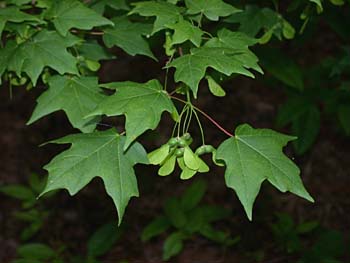
Sugar Maple Tree

Descriptive text

Maple sugar tree, acer saccharum, is known as the national tree of Canada. The shape of maple leaf can be found in its flag. Sugar maple tree is large. It can grow up to 35 meters tall. It has 2 or more feet in diameter. The young bark is smooth. It is light gray in colour. As it gets older, it becomes dark brown. Older tree bark is also ridged and sometimes scaly.
 
The leaves of sugar maple tree are unique. It has 3 to 5 lobes, but they usually have 5 lobes. The leaves are 8 to 20 centimeters long. They grow in the opposite arrangement of the twig. In the fall, the leaves turn yellow, brilliant orange, crimson, or red.